Smart Contracts Transforming Commercial Finance
The Strategic Inflection Point for Commercial Finance
Ok so smart contracts seem to have moved from little experimental pilots to the strategic core of commercial finance, reshaping how capital flows between enterprises, investors, and financial institutions across the world. What began as a niche capability on early public blockchains has evolved into a sophisticated infrastructure layer underpinning trade finance, syndicated lending, supply chain finance, and complex derivatives, with leading institutions in the United States, Europe, and Asia now treating programmable agreements as a fundamental pillar of their digital transformation agendas rather than as speculative technology.
For FinanceTechX, whose readers track the intersection of technology and capital markets, this shift is not simply a matter of new tools, but a profound reconfiguration of how trust, risk, and value are engineered in global commerce. Smart contracts sit at the crossroads of law, code, and finance, and their maturation is forcing executives, founders, regulators, and investors to reconsider long-established operating models, governance frameworks, and revenue structures. As organizations from JPMorgan Chase to HSBC, from Siemens to Samsung, and from Goldman Sachs to BNP Paribas accelerate their blockchain and smart contract initiatives, the contours of the next generation of commercial finance are becoming increasingly clear.
Readers seeking a broader context on how these developments intersect with fintech innovation can explore the stories at FinanceTechX fintech insights, where the interplay between programmable finance, data, and regulation is examined in depth.
From Concept to Production: The Maturity of Smart Contracts
Smart contracts, first popularized through the Ethereum ecosystem, are self-executing agreements whose terms are written directly into code and deployed on distributed ledgers. While early implementations were constrained by scalability, security, and regulatory uncertainty, the 2022-2025 period saw a decisive shift as enterprise-grade platforms, interoperability frameworks, and legal standards emerged, enabling commercial finance institutions to adopt programmable agreements at scale.
The Bank for International Settlements has documented how smart contracts are increasingly embedded into tokenized deposits, wholesale central bank digital currency experiments, and programmable securities, reflecting a broader recognition that automated, verifiable execution can reduce operational risk and settlement latency. In parallel, the World Economic Forum has highlighted the role of smart contracts in the tokenization of real-world assets, from corporate bonds to trade receivables, creating new forms of liquidity and collateralization that are highly relevant to corporate treasurers and institutional investors.
For people focused on macroeconomic implications, the economy coverage provides ongoing analysis of how programmable finance is influencing productivity, capital formation, and cross-border trade, particularly in the United States, the European Union, and high-growth markets in Asia and Africa.
How Smart Contracts Rewire Commercial Finance Workflows
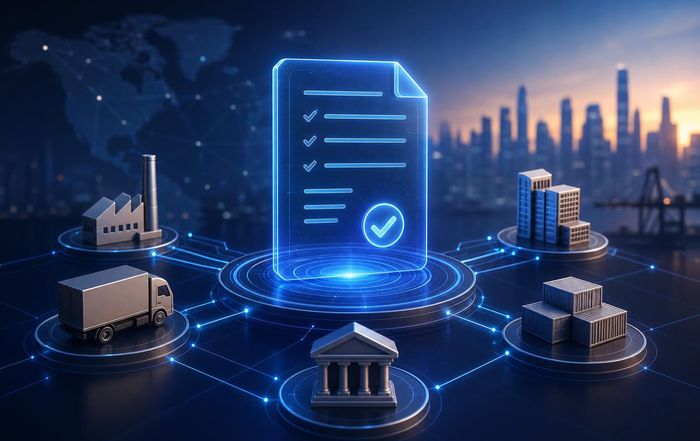
In commercial finance, smart contracts are not merely automating isolated tasks; they are re-architecting end-to-end workflows that previously depended on fragmented systems, manual reconciliation, and intermediated trust. A typical syndicated loan, for example, involves multiple banks, legal advisors, agents, and corporate borrowers exchanging term sheets, covenants, drawdown notices, and interest calculations across disparate platforms, often leading to delays, errors, and disputes. By encoding these terms into a shared smart contract on a permissioned ledger, participating institutions can synchronize positions, automate interest and fee calculations, and manage lifecycle events with a single source of truth, dramatically improving transparency and operational efficiency.
The International Swaps and Derivatives Association has been advancing digital documentation standards and exploring how smart contracts can be harmonized with existing legal frameworks for derivatives, enabling automated execution of margin calls, coupon payments, and early termination events. In trade finance, initiatives aligned with the International Chamber of Commerce digital trade agenda are demonstrating how letters of credit, bills of lading, and insurance certificates can be orchestrated through smart contracts that trigger payment upon verified shipment milestones, reducing fraud and shortening working capital cycles for exporters and importers across continents.
Executives seeking a broader lens on how these structural shifts are influencing global commerce can engage with business analysis, which regularly examines case studies from North America, Europe, and Asia where smart contract-enabled workflows are delivering measurable business value.
Smart Contracts and the Tokenization of Real-World Assets
One of the most transformative applications of smart contracts in commercial finance is the tokenization of real-world assets such as corporate debt, commercial real estate, infrastructure projects, and revenue streams. By representing ownership or claims on these assets as programmable tokens governed by smart contracts, financial institutions can fractionalize previously illiquid exposures, automate compliance, and enable near real-time secondary trading on regulated platforms.
The International Monetary Fund has analyzed how tokenization, when combined with robust regulatory oversight, could expand access to capital markets for mid-sized enterprises in regions such as Latin America, Southeast Asia, and Africa, while also introducing new channels of risk transmission that supervisors must monitor closely. Meanwhile, the European Central Bank has explored the integration of tokenized assets within wholesale settlement infrastructures, including experiments with distributed ledger technology that rely on smart contracts to manage delivery-versus-payment and collateral substitution processes.
For readers interested in how these innovations intersect with public markets and equity trading, FinanceTechX stock exchange coverage provides insights into how exchanges in the United States, Europe, and Asia are experimenting with tokenized listings, blockchain-based settlement layers, and programmable corporate actions that could eventually reshape the mechanics of listing, clearing, and settlement.
Founders, Fintechs, and the New Competitive Landscape
The rise of smart contracts in commercial finance has created a fertile environment for founders and fintechs who can bridge the gap between traditional financial expertise and cutting-edge distributed systems engineering. Across hubs such as New York, London, Frankfurt, Singapore, and Sydney, new ventures are emerging to provide smart contract orchestration platforms, compliance-aware tokenization services, on-chain identity and KYC solutions, and integration layers that connect existing core banking systems to blockchain networks.
Investors and corporate innovation leaders closely follow the work of organizations such as Consensys, R3, and Digital Asset, which have played pivotal roles in building enterprise-grade blockchain stacks and smart contract languages tailored to regulated financial institutions. The U.S. Securities and Exchange Commission and the UK Financial Conduct Authority have, in parallel, refined their guidance on digital assets and distributed ledger use in capital markets, creating clearer pathways for compliant innovation while maintaining a strong focus on investor protection and market integrity.
For founders and innovation executives seeking peer perspectives and practical guidance, FinanceTechX founders hub curates interviews, playbooks, and case studies that illustrate how entrepreneurs across North America, Europe, and Asia are building resilient, regulatory-aligned businesses at the intersection of smart contracts, data, and commercial finance.
Impact on Corporate Banking and Treasury Management
Corporate banking has become one of the most active domains for smart contract deployment, as treasurers in large enterprises seek to optimize liquidity, manage counterparty risk, and streamline multi-currency operations. Smart contracts now underpin programmable cash management solutions where surplus liquidity can be automatically swept into tokenized money market funds, structured deposits, or repo positions based on pre-defined risk and yield parameters, with real-time visibility across subsidiaries and jurisdictions.
The Bank of England and the Monetary Authority of Singapore have both conducted extensive experiments in cross-border payments and multi-currency settlement using distributed ledgers and smart contracts, demonstrating how programmable logic can coordinate complex payment-versus-payment arrangements and reduce foreign exchange settlement risk. In markets such as Germany, the Netherlands, and the Nordic countries, where corporate clients are highly digitalized, banks have been early adopters of smart-contract-based cash pooling and virtual account structures that can adapt dynamically to changing business conditions.
Executives who wish to understand how these developments are reshaping relationship banking, product design, and risk management can explore FinanceTechX banking insights, which track the strategic responses of incumbent banks and challengers as they integrate smart contracts into their core service offerings.
The Role of Artificial Intelligence in Smart Contract Ecosystems
As smart contracts become more complex and pervasive in commercial finance, artificial intelligence is increasingly used to design, audit, monitor, and optimize these programmable agreements. Natural language processing models are translating traditional legal contracts into structured data and code templates, while formal verification tools supported by AI assist in identifying vulnerabilities and logic errors before deployment, significantly reducing the risk of costly exploits or unintended behaviors.
Research from institutions such as the MIT Digital Currency Initiative and the Stanford Center for Blockchain Research has highlighted how AI-driven analytics can monitor on-chain activity to detect anomalies, predict liquidity bottlenecks, and inform risk management decisions in real time. In parallel, regulators and policy bodies, including the Organisation for Economic Co-operation and Development, are examining the governance implications of combining AI with autonomous financial infrastructure, emphasizing the need for transparency, accountability, and human oversight.
Readers interested in the convergence of AI, blockchain, and commercial finance can delve deeper into FinanceTechX AI coverage, where the strategic, ethical, and operational dimensions of intelligent, programmable finance are analyzed for decision-makers across industries.
Security, Compliance, and Operational Risk
Despite the promise of smart contracts, security and compliance remain central concerns for financial institutions and regulators, particularly in jurisdictions such as the United States, the European Union, Singapore, and Japan where supervisory scrutiny is intense. High-profile exploits on public blockchain networks have underscored the importance of rigorous code audits, formal verification, and secure key management, as vulnerabilities in smart contract logic can translate directly into financial losses or systemic risk.
Guidelines from the European Banking Authority and the Financial Stability Board emphasize that institutions deploying smart contracts must maintain robust operational resilience frameworks, including contingency planning, incident response, and third-party risk management across complex vendor ecosystems. In parallel, privacy regulations such as the EU General Data Protection Regulation and data localization rules in countries like China and India require careful architectural design to ensure that on-chain data structures and off-chain storage solutions comply with legal requirements around data minimization, consent, and cross-border transfers.
For risk officers, CISOs, and compliance leaders navigating these challenges, FinanceTechX security section provides analysis of emerging standards, best practices in smart contract security, and case studies of how leading institutions in North America, Europe, and Asia are balancing innovation with rigorous risk controls.
Workforce, Skills, and the Future of Jobs in Finance
The integration of smart contracts into commercial finance is reshaping workforce requirements, creating new roles while transforming existing ones in banking, asset management, corporate treasury, and legal services. Demand has surged for professionals who can bridge financial engineering, legal reasoning, and software development, including smart contract architects, blockchain product managers, digital asset compliance specialists, and quantitative developers with expertise in distributed systems.
Reports from the World Bank and the World Economic Forum Future of Jobs initiative indicate that financial centers in the United States, United Kingdom, Germany, Singapore, and the United Arab Emirates are experiencing acute shortages of talent with deep blockchain and smart contract skills, prompting universities and professional bodies to expand curricula and certification programs. Legal professionals in markets such as Canada, Australia, France, and the Netherlands are increasingly expected to understand the technical underpinnings of programmable agreements, as courts and arbitration forums begin to encounter disputes involving hybrid code-and-text contracts.
Professionals seeking to position themselves for these evolving opportunities can consult FinanceTechX jobs and careers, which tracks emerging roles, salary trends, and upskilling pathways in fintech, digital assets, and smart-contract-enabled commercial finance.
Intersections with Crypto, DeFi, and Institutional Markets
While commercial finance institutions often distinguish their regulated activities from the more experimental domains of cryptocurrency and decentralized finance, the underlying smart contract technologies are increasingly convergent. Institutional investors and banks are studying how innovations in decentralized lending, automated market making, and on-chain collateral management can inform the design of compliant, permissioned products that deliver similar efficiencies without compromising regulatory obligations.
The Bank for International Settlements Innovation Hub has explored how decentralized finance mechanisms could be adapted for regulated environments, highlighting both the potential for improved transparency and the risks associated with composability and interconnectedness. Jurisdictions such as Switzerland and Singapore have articulated clear frameworks for tokenization, custody, and digital asset trading, enabling banks and asset managers to experiment with smart contract-based products that bridge traditional securities and digital assets.
Readers who follow developments in digital assets, tokenization, and the regulated edge of decentralized finance can access dedicated analysis at crypto and digital assets section, where institutional adoption trends in North America, Europe, and Asia are examined with a focus on governance, compliance, and long-term viability.
Green Finance, Sustainability, and Environmental Considerations
As smart contracts become more prevalent in commercial finance, their environmental impact and potential role in advancing sustainability objectives have come under increased scrutiny. Early concerns about the energy consumption of proof-of-work blockchains have been partially mitigated by the widespread adoption of proof-of-stake and other energy-efficient consensus mechanisms, as documented by organizations such as the International Energy Agency. At the same time, smart contracts are being leveraged to enhance the transparency and integrity of green finance instruments, including sustainability-linked loans, green bonds, and carbon credit markets.
The United Nations Environment Programme Finance Initiative has highlighted how programmable finance can support verifiable impact tracking, automated disbursement of funds tied to environmental performance indicators, and improved monitoring of supply chain emissions across regions from Europe to Asia and South America. In practice, this means that a sustainability-linked revolving credit facility for a multinational manufacturer could embed key performance indicators directly into smart contracts, automatically adjusting interest margins based on verified emissions reductions or renewable energy usage.
Decision-makers seeking to understand how smart contracts intersect with ESG strategies and climate-aligned finance can explore FinanceTechX green fintech and environment coverage and environment insights, where case studies and policy developments from Europe, North America, and emerging markets are analyzed through the lens of sustainable innovation.
Education, Standards, and the Global Regulatory Landscape
The global adoption of smart contracts in commercial finance depends not only on technology readiness but also on education, common standards, and regulatory convergence across jurisdictions. Industry bodies such as ISO, SWIFT, and the Global Financial Markets Association are working on interoperability standards that allow smart contracts to integrate with existing messaging protocols, reference data, and settlement infrastructures, reducing fragmentation and enabling cross-border use cases that span North America, Europe, and Asia.
Regulators and central banks in countries including the United States, United Kingdom, Japan, South Korea, and Brazil are engaged in active dialogue through forums such as the Financial Stability Board and the Committee on Payments and Market Infrastructures to ensure that smart-contract-enabled systems uphold principles of financial stability, market integrity, and consumer protection. Simultaneously, academic institutions and professional associations are expanding educational programs to equip the next generation of finance and legal professionals with the skills needed to design, interpret, and oversee programmable agreements.
Executives, policymakers, and practitioners who wish to stay ahead of these developments can leverage resources highlighted in FinanceTechX education section, which curates courses, certifications, and thought leadership relevant to smart contracts, digital assets, and the broader transformation of commercial finance.
Big Goals Coming
Well smart contracts have firmly established themselves as a cornerstone of commercial finance infrastructure rather than a speculative experiment. For global banks, asset managers, corporates, and regulators, the strategic question is no longer whether programmable agreements will matter, but how quickly organizations can adapt their operating models, risk frameworks, and talent strategies to harness their potential while managing new forms of complexity and interdependence.
Institutions that treat smart contracts as an isolated IT initiative risk missing the broader transformation unfolding across supply chains, capital markets, and corporate balance sheets. Instead, leading organizations in the United States, Europe, and Asia are embedding programmable finance into their core strategic planning, reevaluating product portfolios, partnership models, and data architectures to align with a world where financial logic is increasingly codified and executed on shared, tamper-resistant infrastructures. This demands close collaboration between technology leaders, business line executives, legal and compliance teams, and external partners, as well as an ongoing commitment to learning and experimentation.
For decision-makers seeking to track how these dynamics evolve across regions and sectors, the team here will continue to provide daily in-depth reporting and analysis across its global finance and world coverage and latest news hub, connecting developments in fintech, banking, capital markets, regulation, and sustainability into a coherent narrative. In an environment where the boundary between code and contract is steadily dissolving, organizations that invest early in understanding and shaping smart contract ecosystems will be best positioned to capture new sources of value, build resilient competitive advantages, and contribute to a more transparent, efficient, and inclusive global financial system.
