Africa's Expanding Digital Financial Ecosystem: The Next Frontier for Global Fintech
A New Center of Gravity for Digital Finance
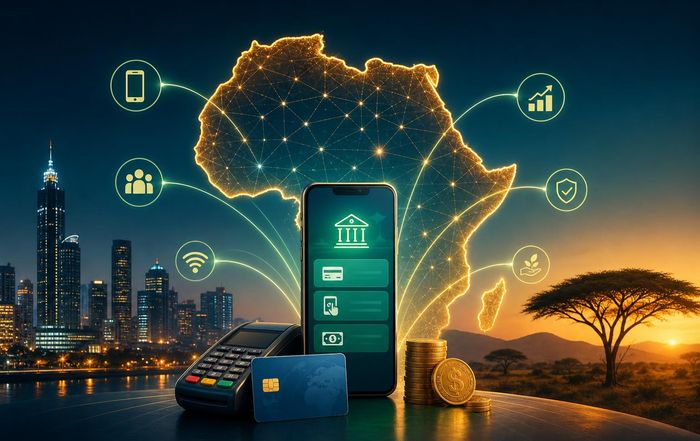
Africa's digital financial ecosystem has moved from the periphery of global fintech conversations to a central position in strategy discussions inside boardrooms in New York, London, Frankfurt, Singapore, and Hong Kong. What was once framed primarily as a story of mobile money and financial inclusion has evolved into a sophisticated, multi-layered landscape that now spans real-time payments, embedded finance, digital banking, cross-border remittances, crypto-asset experimentation, and artificial intelligence-driven risk management. For the global business clever geeks that follow FinanceTechX and its 100% percent new and independent coverage of fintech innovation, macroeconomic shifts, and founder-led disruption, Africa's trajectory is no longer an optional side story; it is a forward-looking indicator of how finance will be built, distributed, and regulated in emerging and advanced markets alike.
From Kenya's pioneering M-Pesa platform to Nigeria's vibrant payments startups, South Africa's advanced banking infrastructure, Egypt's scaling of digital wallets, and Francophone West Africa's rapid mobile penetration, the continent has become a proving ground for models that solve real-world frictions at scale. According to the World Bank, hundreds of millions of Africans have gained access to transaction accounts over the past decade, largely through mobile money and agent networks rather than traditional branches, illustrating how leapfrogging can redefine financial system architecture when legacy infrastructure is thin. As global investors, policymakers, and technology providers examine how to extend inclusive, resilient, and profitable financial services in an era of demographic shifts and geopolitical uncertainty, Africa's expanding digital finance ecosystem offers both a blueprint and a stress test.
From Mobile Money to Multi-Rail Digital Finance
The first phase of Africa's digital finance story was dominated by mobile money, with Safaricom's M-Pesa in Kenya and similar services in Tanzania, Ghana, Uganda, and beyond demonstrating that basic feature phones, USSD codes, and dense agent networks could substitute for branches and ATMs. Reports from the GSMA have documented how this model enabled person-to-person transfers, bill payments, and merchant acceptance in markets where card penetration remained limited and formal banking infrastructure sparse. Learn more about how mobile money reshaped financial inclusion through resources provided by the GSMA.
However, by the mid-2020s, the ecosystem had matured into a far more complex architecture of interoperable rails, digital wallets, and platform-based services. In markets such as Nigeria, Ghana, and South Africa, regulators and industry players have been working toward real-time payment systems and interoperability between mobile money, bank accounts, and emerging fintech wallets. The Bank for International Settlements has highlighted these developments as part of a broader global trend toward instant payments and open banking frameworks, where data portability and API-driven connectivity are becoming critical competitive levers; more detailed analysis is available through the BIS.
For businesses and investors following FinanceTechX, this shift from single-rail mobile money to multi-rail digital finance is crucial. It changes the economics of customer acquisition, the nature of competition between banks and non-banks, and the way value is captured across the payments stack. It also opens the door to embedded finance, where non-financial platforms in e-commerce, mobility, agriculture, and health integrate payments, credit, and insurance directly into their user journeys, creating new data streams and risk models that traditional institutions never had access to.
Regulatory Evolution and the Architecture of Trust
No digital financial ecosystem can scale sustainably without robust regulatory foundations, and Africa's experience over the past decade has been one of rapid learning, experimentation, and, at times, painful course correction. Central banks and financial regulators from Nigeria to Kenya, South Africa, Egypt, and Morocco have had to balance the imperative of financial inclusion and innovation with the equally critical mandates of stability, consumer protection, and anti-money laundering controls. The International Monetary Fund has repeatedly emphasized that effective regulation of digital finance requires both capacity building and cross-border coordination, particularly in regions with high remittance flows and fragmented legal frameworks; further insights on regulatory capacity in emerging markets can be found via the IMF.
Regulatory sandboxes, innovation hubs, and tiered licensing frameworks for payment service providers and digital lenders have become common tools. In some markets, such as Kenya and Ghana, regulators have encouraged experimentation while tightening oversight on digital credit practices to address concerns around over-indebtedness and consumer data misuse. In others, including Nigeria, shifting stances on crypto assets and digital banking licenses have tested the resilience and adaptability of startups and investors. The Financial Stability Board and the Basel Committee on Banking Supervision have both drawn on African case studies when examining how non-bank payment providers and big tech platforms may affect systemic risk, highlighting the importance of proportionate, risk-based supervision; a useful overview of global prudential perspectives is available from the FSB.
Trust, in this context, is not only a matter of regulatory compliance but also of data governance, cybersecurity, and transparent pricing. With rising concerns about identity theft, fraud, and cross-border cyber threats, African regulators have increasingly aligned with global standards such as those promoted by the Financial Action Task Force, while local industry associations collaborate with global cybersecurity firms to strengthen defenses. Businesses tracking developments through FinanceTechX and its coverage of security and risk recognize that the credibility of digital finance in Africa will depend on whether providers can maintain robust defenses and transparent governance as transaction volumes and complexity grow.
Founders, Talent, and the Entrepreneurial Engine
The expansion of Africa's digital financial ecosystem is inseparable from the rise of a new generation of founders, product leaders, and technologists who have built companies capable of serving tens of millions of users while navigating fragmented markets and complex regulatory environments. From high-profile unicorns in payments and neobanking to less public but equally impactful infrastructure players in identity verification, credit scoring, and agency banking, these entrepreneurs have transformed the perception of African fintech from a niche inclusion story to a global-scale opportunity. Profiles and insights into such founders are increasingly central to FinanceTechX coverage on entrepreneurship and leadership.
Global accelerators and venture capital firms, including Y Combinator, Sequoia Capital, and regional investors such as Partech Africa and TLcom Capital, have played a role in channeling capital and expertise into the ecosystem. At the same time, local angel networks and corporate venture arms of established banks and telecoms have introduced more nuanced, market-aware funding. The African Development Bank has underscored that the continent's demographic profile, with a median age under 20 in many countries, creates both a challenge and an opportunity: the need to create millions of formal jobs and the potential to harness a digitally native workforce; more demographic and employment analysis can be found via the AfDB.
For the global business community, this founder-driven momentum has several implications. It means that Africa is not merely a destination for imported solutions but a source of original financial infrastructure and product innovation that can be adapted for other emerging markets in Asia, Latin America, and even underserved segments in North America and Europe. It also means that competition for skilled engineers, data scientists, and product managers is intensifying, and that companies seeking to build or partner in Africa's fintech space must engage with local talent ecosystems, universities, and training programs. Readers of FinanceTechX exploring jobs and skills trends increasingly view African hubs such as Lagos, Nairobi, Cape Town, and Casablanca as integral to their global workforce strategies.
The Macroeconomic and Capital Markets Dimension
Africa's digital financial expansion cannot be understood in isolation from its broader macroeconomic context. Over the past decade, many African economies have experienced a mix of strong growth, commodity price volatility, currency pressures, and fiscal constraints. For policymakers and investors, digital finance has been both a tool for resilience and a potential source of new vulnerabilities. The World Bank and OECD have documented how improved payment systems and digital tax collection can broaden the revenue base and enhance state capacity, particularly when combined with digital identity systems; more background on these dynamics is available from the World Bank and the OECD.
The development of capital markets and stock exchanges across Nigeria, South Africa, Kenya, Egypt, and Morocco has also intersected with fintech growth. Some exchanges have launched dedicated segments for technology and high-growth companies, while others explore digital listing processes and blockchain-based settlement infrastructure. For the audience of FinanceTechX, which closely follows stock exchange developments and cross-border capital flows, the question is how African fintechs will access growth capital beyond private markets, and whether local bourses can compete with international listings in London, New York, or Amsterdam.
Remittances represent another critical macroeconomic linkage. Africa remains one of the most remittance-dependent regions in the world, and the cost of sending money to and within the continent has historically been among the highest. Digital remittance platforms, often partnering with local mobile money providers and banks, have driven down costs and increased transparency, aligning with the United Nations Sustainable Development Goals on reducing remittance costs and promoting financial inclusion. Businesses seeking to understand the intersection of remittances, development, and digital innovation can explore additional context from the UN.
Banking, Embedded Finance, and the Competitive Landscape
The relationship between incumbent banks and fintechs in Africa has evolved from early skepticism and defensive postures to a more nuanced mix of competition, partnership, and, in some cases, acquisition. Large banks in South Africa, Nigeria, Kenya, and Morocco have invested heavily in digital channels, core system modernization, and open-API strategies, recognizing that younger, digitally native customers expect seamless, mobile-first experiences. At the same time, specialized fintechs have carved out niches in merchant acquiring, SME lending, cross-border payments, and consumer wallets, often moving faster in product iteration and user experience. The strategic choices of these incumbents are closely followed in FinanceTechX's banking and financial services section, where case studies of collaboration and competition across continents are increasingly intertwined.
Embedded finance is accelerating this dynamic. E-commerce platforms, logistics operators, agritech startups, and ride-hailing services are integrating payments, savings, insurance, and credit into their core offerings, leveraging transaction data to underwrite customers who lack traditional credit histories. This has prompted both banks and fintechs to rethink distribution and risk management. Industry reports from McKinsey & Company and Boston Consulting Group have highlighted Africa as one of the global regions where embedded finance could have an outsized impact on SME formalization and productivity; executives can explore these perspectives via McKinsey and BCG.
As this ecosystem deepens, questions of interoperability, data ownership, and platform dominance become more pressing. Will telecom-led wallets, bank-led apps, or multi-purpose super apps become the primary interface for financial services in key markets? How will regulators ensure that the benefits of competition are preserved while systemic risks are contained? For FinanceTechX readers, these questions resonate with broader global debates around platform power, open banking, and digital public infrastructure.
Artificial Intelligence, Data, and Risk in African Fintech
Artificial intelligence and advanced analytics have become integral to the next phase of Africa's digital financial evolution. With millions of users transacting primarily via mobile devices, fintechs and banks have access to rich behavioral data that can be used to score credit, detect fraud, personalize offers, and optimize pricing. However, the responsible use of this data is an increasingly sensitive issue, with regulators, civil society, and global partners scrutinizing privacy protections, algorithmic fairness, and potential discrimination. For readers who follow FinanceTechX's coverage of AI in finance, Africa offers a compelling case study of AI's promise and pitfalls in high-growth, data-scarce-but-mobile-rich environments.
Global technology companies such as Google, Microsoft, and Amazon Web Services have expanded cloud infrastructure and AI tooling on the continent, partnering with local startups and universities to build capacity. At the same time, local data science communities and research labs are developing models tailored to African languages, consumption patterns, and informal sector dynamics. Organizations like Data Science Africa and initiatives supported by the UN Economic Commission for Africa have emphasized the need for ethical, inclusive AI frameworks that reflect local realities; more information on regional AI and digital policy initiatives is available through the UNECA.
From a risk perspective, AI-driven credit and underwriting in Africa must contend with volatile incomes, limited formal data, and exposure to climate and commodity shocks. This has led to experimentation with hybrid models that blend traditional financial data with alternative sources such as mobile airtime usage, utility payments, and agronomic information. For global institutions exploring partnerships or investments, understanding these models is essential, not only for risk assessment but also for compliance with international standards on consumer protection and model governance.
Crypto, Digital Assets, and the Search for Regulatory Clarity
Africa's engagement with crypto assets and digital currencies has been both enthusiastic and contested. In countries such as Nigeria, Kenya, South Africa, and Ghana, retail and SME adoption of cryptocurrencies for remittances, savings, and speculative trading has at times surged, driven by currency volatility, capital controls, and the search for alternative stores of value. At the same time, central banks and regulators have expressed concerns about consumer protection, financial stability, and illicit flows, leading to a patchwork of restrictions, guidance, and, in some cases, pilot projects for central bank digital currencies.
The Bank of Nigeria, for example, launched the eNaira as a central bank digital currency experiment, while other African central banks have been in various stages of research or pilot implementation. The Bank for International Settlements has documented these CBDC initiatives, noting both the potential benefits for financial inclusion and the operational challenges of integrating them into existing payment ecosystems; readers can explore CBDC case studies via the BIS. For those following FinanceTechX's exploration of crypto and digital asset trends, Africa represents a microcosm of the global debate around how to harness innovation while mitigating risks.
Global exchanges and custodians have shown interest in African markets, but regulatory uncertainty and infrastructure gaps have limited institutional participation. Over the next few years, the trajectory of Africa's crypto and digital asset landscape will likely depend on whether regulators can move from reactive stances to coherent, risk-based frameworks that distinguish between speculative trading, real-economy use cases, and systemic infrastructure.
Green Fintech, Climate Risk, and Sustainable Finance
As climate risks intensify and global capital increasingly seeks sustainable assets, Africa's position as both one of the most vulnerable regions to climate change and one of the least historically responsible for emissions has come into sharp focus. Digital finance is beginning to intersect with this reality in ways that could reshape both development finance and private capital flows. Green fintech solutions-ranging from pay-as-you-go solar financing and climate-linked microinsurance to carbon credit marketplaces and ESG data platforms-are emerging across East, West, and Southern Africa. For FinanceTechX, which dedicates editorial attention to green fintech and sustainability and environmental impacts, these developments sit at the intersection of technology, climate policy, and capital markets.
International frameworks such as those developed by the Task Force on Climate-related Financial Disclosures and the International Sustainability Standards Board are beginning to influence how African financial institutions report on climate risks and opportunities. At the same time, multilateral institutions and climate funds are designing blended finance structures to de-risk private investment in renewable energy, climate-resilient agriculture, and sustainable infrastructure. The UN Environment Programme Finance Initiative provides useful resources on sustainable finance practices that are increasingly relevant to African banks and asset managers; executives can learn more about sustainable business practices.
Digital platforms that can track, verify, and tokenize environmental impacts are likely to play a growing role in connecting African projects with global capital markets. This will require not only technical innovation but also robust governance, standardization, and cross-border regulatory cooperation, areas where Africa's experience with mobile money interoperability and regional payment systems may offer valuable lessons.
The Global Significance of Africa's Digital Financial Rise
For the international jet setting financial entrepreneurial audience that turns to FinanceTechX for balanced debate and analysis on business strategy, global economic shifts, and the intersection of technology and finance, Africa's expanding digital financial ecosystem is not simply a regional narrative. It is a live experiment in building financial infrastructure under conditions of rapid urbanization, demographic change, infrastructure constraints, and institutional evolution. The solutions that emerge-from low-cost real-time payments and agent-based distribution to AI-driven risk models and green fintech platforms-will inform how financial services are designed and delivered in other parts of the world facing similar constraints, whether in South Asia, Latin America, or underserved communities in advanced economies.
Moreover, Africa's experience underscores the importance of aligning innovation with trust, inclusion, and resilience. As global regulators, investors, and corporates navigate an era of heightened geopolitical tension, cyber risk, and climate uncertainty, the continent's fintech journey offers both inspiration and caution. It demonstrates that leapfrogging is possible, but only when supported by adaptive regulation, robust digital infrastructure, and investment in human capital. It shows that founders and financial institutions can collaborate to create new value chains, but also that misaligned incentives and weak governance can quickly erode hard-won trust.
FinanceTechX positions Africa not as an outlier but as a forward indicator of where digital finance is heading. Through ongoing coverage of breaking fintech news and regulatory developments, in-depth interviews with founders and policymakers, and super analysis of cross-continental trends, the platform aims to equip decision-makers in North America, Europe, Asia, and beyond with the insight needed to engage with Africa's financial transformation in a way that is commercially sound, socially responsible, and strategically aligned with the next decade of global economic change.
