
The Future of Intelligent Payment Orchestration
Intelligent Orchestration as the New Core of Digital Commerce
By 2026, the global payments landscape has become so fragmented, regulated and data-intensive that the traditional "single gateway" model no longer provides the resilience, conversion performance or strategic flexibility that modern enterprises require. As cross-border e-commerce, embedded finance and real-time payments mature in markets from the United States and United Kingdom to Singapore, Brazil and South Africa, a new architectural layer has moved to the center of digital commerce: intelligent payment orchestration.
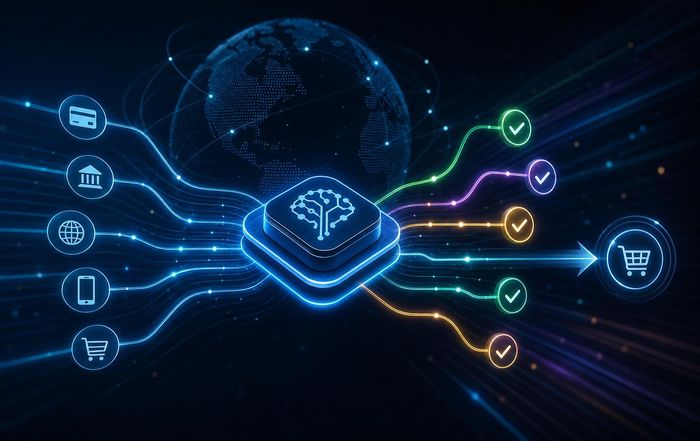
For the business audience of FinanceTechX, which closely follows developments across fintech, business strategy, global economy and the evolution of banking infrastructure, payment orchestration is no longer a niche technical topic. It is a strategic capability that directly affects customer acquisition costs, margin structure, geographic expansion and even corporate valuation. Intelligent payment orchestration platforms sit between merchants and a growing constellation of acquirers, card schemes, alternative payment methods, digital wallets, real-time payment systems and fraud providers, making real-time decisions about routing, risk and authorization that can add or destroy millions in annual revenue.
As regulators from the European Central Bank to the Monetary Authority of Singapore intensify scrutiny on data protection, open banking and instant payments, and as big tech players like Apple, Alphabet, Tencent and Amazon expand their financial services footprints, the orchestration layer has become a crucial control point where experience, expertise, authoritativeness and trustworthiness must be demonstrated every day. The future of intelligent payment orchestration will be defined by the ability to combine advanced artificial intelligence, deep regulatory understanding, robust security, and a nuanced appreciation of local payment cultures across regions including Europe, Asia, North America, South America and Africa.
From Gateway Aggregation to Intelligence-Driven Infrastructure
Early payment orchestration emerged as a pragmatic response to operational complexity. Merchants with global ambitions needed to connect to multiple payment service providers, card acquirers and local payment methods to reach customers in markets such as Germany, Brazil, China and South Korea, where domestic schemes and bank transfer systems dominate. Instead of building and maintaining dozens of direct integrations, companies turned to orchestration platforms that aggregated these connections into a single interface and provided basic routing rules.
By 2026, this aggregation layer has evolved into an intelligence-driven infrastructure that operates more like a real-time optimization engine than a static routing hub. Modern orchestration platforms ingest and analyze high-volume transaction data, issuer response codes, device fingerprints, behavioral signals and external risk indicators to determine, in milliseconds, which acquirer or method is most likely to approve a given transaction at the lowest cost and risk. This shift mirrors broader trends in AI-driven decisioning, where machine learning models continuously refine their strategies based on observed outcomes, similar to how algorithmic trading transformed the stock exchange landscape.
Organizations such as McKinsey & Company and Boston Consulting Group have highlighted how payments are becoming a core driver of digital business models rather than a back-office utility, and this perspective is clearly visible in the orchestration space, where merchants in sectors ranging from subscription media to B2B SaaS treat payment performance as a primary growth lever. Learn more about how global payments economics are reshaping business models through resources from McKinsey's payments insights and BCG's global payments reports.
This new generation of intelligent orchestration platforms must demonstrate strong expertise in the technical nuances of tokenization, 3-D Secure flows, network token usage and real-time risk scoring, while also understanding local regulatory regimes and consumer expectations. For a business-focused publication like FinanceTechX, which covers both founders' journeys and institutional innovation, the orchestration story is also a story of product leadership and operating discipline, as companies strive to build infrastructure that can scale safely across multiple continents.
AI and Data as the Decision Engine of Orchestration
Artificial intelligence has moved from experimental pilots to production-grade infrastructure in payments, and in 2026, it is the central differentiator for intelligent payment orchestration. Platforms increasingly rely on advanced machine learning techniques, including gradient-boosted decision trees, deep learning architectures and reinforcement learning, to optimize for multiple objectives at once: approval rate, fraud risk, processing cost, chargeback exposure and regulatory compliance.
Where earlier systems relied on static rules such as "route European cards to acquirer A and US cards to acquirer B," modern orchestrators analyze granular patterns such as issuer-specific behavior, time-of-day approval variations, device-level risk signals, historical performance for particular merchant category codes, and even the impact of strong customer authentication frictions on conversion. This level of nuance is particularly important in markets like the United Kingdom and the European Union, where PSD2 and strong customer authentication requirements have changed how issuers evaluate transactions. Learn more about evolving European regulation on the European Commission's payments policy pages.
The most sophisticated platforms combine multiple AI models into an orchestration "brain" that scores each transaction in real time and selects an optimal path, sometimes even attempting sequential routing when an initial authorization fails, while carefully controlling for increased risk of duplicates or consumer confusion. In parallel, AI-driven fraud engines, often integrated via the same orchestration layer, evaluate behavioral anomalies, device reputation and identity signals, drawing on threat intelligence from organizations such as Europol, FBI and leading cybersecurity vendors. Businesses seeking to deepen their understanding of AI's role in financial services can explore resources from the OECD's AI policy observatory and World Economic Forum's AI and finance initiatives.
For the FinanceTechX audience, which follows developments in AI and automation and security, the crucial point is that AI in payment orchestration must meet a higher bar of explainability and governance than many other domains. Merchants and regulators increasingly expect orchestrators to provide transparent reasoning for routing and risk decisions, audit trails for model changes, and clear controls to avoid unintended discrimination or unfair treatment of specific customer groups. This is pushing the sector towards more robust model governance frameworks, inspired by guidance from institutions such as the Bank for International Settlements and the Financial Stability Board, which regularly publish analyses on the safe adoption of AI in finance.
Regulatory, Compliance and Data-Sovereignty Pressures
The future of intelligent payment orchestration will be shaped as much by regulation as by technology. Since 2020, there has been a steady tightening of data protection, open banking, anti-money laundering and instant payments rules across major jurisdictions. The General Data Protection Regulation (GDPR) in Europe, evolving privacy frameworks in the United States, and new data localization laws in countries such as China, India and Brazil are forcing orchestration platforms to rethink how and where they store, process and route transaction data.
In the European Union, the move towards PSD3 and the Payment Services Regulation (PSR) is expected to further refine the obligations of payment service providers, including stronger requirements around fraud prevention, consumer rights and open banking interfaces. Businesses can follow these developments through official updates from the European Banking Authority and the European Central Bank. In the United States, the Consumer Financial Protection Bureau and Federal Reserve are providing more clarity on data sharing, instant payments via FedNow, and the responsibilities of intermediaries in complex payment chains, which has direct implications for orchestration providers that touch U.S. consumer transactions.
Data sovereignty is also emerging as a strategic constraint, especially for global merchants operating in regions with strict localization rules, such as China, Russia and parts of the Middle East. Orchestration platforms must design architectures that can comply with local data residency requirements while still offering global optimization capabilities. This often involves regional data centers, edge processing and careful partitioning of sensitive information. Organizations interested in the broader context of digital trade and data flows can explore research from the World Trade Organization and UNCTAD's digital economy reports.
For FinanceTechX, which reports on worldwide regulatory shifts and their impact on fintech innovation, it is clear that intelligent payment orchestration will increasingly be judged on its compliance posture and its ability to adapt quickly to new rules. Trustworthiness in this context is not just about preventing data breaches; it is about demonstrating proactive regulatory engagement, robust internal controls, independent audits and transparent communication with both merchants and end consumers.
Business Strategy, Margins and the New Economics of Payments
From a business perspective, intelligent payment orchestration is fundamentally about economics. Every percentage point improvement in authorization rate can translate into substantial incremental revenue, particularly for high-volume merchants in sectors such as retail, travel, gaming, subscription services and B2B marketplaces. Conversely, poor routing decisions, excessive payment method fragmentation or weak fraud controls can erode margins, increase chargeback costs and damage brand reputation.
In markets like the United States, United Kingdom, Germany and Canada, where card penetration is high and interchange fees remain a major cost driver, orchestration enables merchants to strategically balance card transactions with alternative payment methods and account-to-account solutions, including real-time payment schemes. Learn more about the economics of interchange and merchant fees through resources from the Federal Reserve and the Bank of England. In emerging markets across Asia, Africa and South America, where mobile wallets, QR-based payments and super-app ecosystems dominate, orchestration must integrate with local champions such as Alipay, WeChat Pay, Pix in Brazil or mobile money systems across East Africa, while navigating local regulatory and currency controls.
For growth-oriented founders and executives, the decision to implement or upgrade an orchestration strategy is increasingly seen as a board-level topic. The ability to enter new markets quickly, experiment with local payment methods, and negotiate better terms with acquirers and processors depends on having a flexible, intelligent orchestration layer. This is particularly relevant for scale-ups and unicorns in Europe, Asia and North America that are preparing for IPOs or strategic exits, where investors scrutinize payment performance metrics as part of their due diligence. Readers can explore how payment strategy intersects with corporate finance and IPO readiness through FinanceTechX's business coverage and global analysis from the International Monetary Fund.
The rise of embedded finance is amplifying these dynamics. Platforms in sectors as diverse as logistics, healthcare, education and SaaS are embedding payments directly into their workflows, effectively becoming payment facilitators or marketplaces. Intelligent orchestration allows these platforms to manage complex multi-party flows, split payments, payouts and compliance obligations while maintaining a seamless user experience. This is creating new opportunities and risks in areas such as jobs in fintech and payments, where specialized skills in payment engineering, risk analytics and regulatory compliance are in high demand.
Intelligent Orchestration in Banking, Open Finance and Real-Time Payments
Traditional banks and new digital challengers are both rethinking their role in the payments value chain. As open banking and open finance frameworks expand across Europe, the United Kingdom, Australia, Brazil and parts of Asia, banks are exposing APIs for account access, payments initiation and data services. Intelligent payment orchestration platforms are becoming the connective tissue that allows merchants, fintechs and platforms to combine card payments, bank transfers, instant payments and digital wallets into coherent customer journeys.
In the Eurozone, the push towards pan-European instant payments and initiatives like the European Payments Initiative are creating new rails that orchestration platforms can leverage. In the United States, the coexistence of FedNow and The Clearing House's RTP network requires careful orchestration to optimize for cost, speed and coverage. Banks and corporates can follow these developments through the Bank for International Settlements' CPMI reports and the European Payments Council. In Asia, real-time payment systems such as UPI in India, PayNow in Singapore and cross-border linkages between ASEAN countries are driving new expectations for speed and transparency, which orchestration platforms must meet while managing foreign exchange and compliance risks.
For the FinanceTechX community, which tracks banking innovation and the intersection of AI, security and payments, a key question is how banks will position themselves relative to independent orchestration providers. Some global banks and payment processors are building their own orchestration capabilities, seeking to offer merchants a "one-stop shop" that combines acquiring, alternative payment methods, fraud and data analytics. Others are partnering with specialized orchestration platforms to complement their core services. In all cases, the competitive landscape is shifting, with orchestration becoming a battleground for data ownership, customer relationships and platform economics.
The future will likely see greater interoperability between bank-led and third-party orchestration layers, as regulators in regions such as Europe, the United States and Asia push for open, competitive payment ecosystems. Businesses that understand how to architect their payment stack to remain flexible, portable and data-rich will be better positioned to navigate this evolving environment.
Crypto, Tokenization and Green Fintech in the Orchestration Era
Although the speculative phase of cryptocurrencies has moderated in many markets, tokenized value and blockchain-based settlement continue to influence the future of payment orchestration. Stablecoins, central bank digital currency pilots and tokenized deposits are being explored by central banks and regulators worldwide, from the European Central Bank's digital euro project to experiments by the Bank of Japan and Monetary Authority of Singapore. Learn more about these initiatives through the BIS Innovation Hub's work on CBDCs and the IMF's digital money research.
Intelligent orchestration platforms are beginning to integrate tokenized payment instruments, stablecoin on- and off-ramps and blockchain-based cross-border corridors, particularly for B2B and treasury use cases where speed and transparency are critical. For merchants and platforms, the orchestration layer provides a way to abstract the complexity of different blockchains, custody arrangements and regulatory classifications, presenting them as just another set of payment methods with specific cost, speed and risk profiles. Readers interested in the evolution of digital assets and payments can explore FinanceTechX's crypto coverage and high-level perspectives from the World Bank's fintech and digital currency resources.
At the same time, environmental and sustainability considerations are becoming more prominent in payment strategy. Investors, regulators and consumers are increasingly attentive to the carbon footprint of digital infrastructure, including data centers, blockchain networks and high-volume payment processing. Intelligent orchestration can contribute to greener finance by optimizing transaction flows to minimize energy usage, choosing providers with strong sustainability commitments, and enabling transparent reporting on the environmental impact of payment operations. Learn more about sustainable business practices and climate-aligned finance through resources from the Task Force on Climate-related Financial Disclosures and the UN Environment Programme Finance Initiative.
For FinanceTechX, which covers green fintech and environmental innovation, the intersection of intelligent orchestration and sustainability represents a growing area of interest. As large merchants, especially in Europe, North America and Asia-Pacific, set net-zero commitments, their choice of payment partners and orchestration strategies will increasingly factor in environmental performance alongside cost and conversion metrics.
Talent, Governance and the Organizational Dimension
Behind every intelligent payment orchestration strategy is a multidisciplinary team that combines engineering, data science, risk management, compliance, product management and commercial negotiation skills. As the orchestration layer becomes more central to revenue and risk, organizations are rethinking their internal structures, often creating dedicated payment strategy teams that report to the CFO, COO or Chief Revenue Officer, and work closely with security and data governance functions.
The talent market reflects this shift. There is rising demand for professionals who understand both the technical intricacies of payment protocols and the business implications of routing decisions, interchange structures and cross-border regulations. For readers tracking jobs and careers in fintech, this creates new opportunities in regions from the United States and United Kingdom to Singapore, Berlin, Toronto and Sydney, where global payment hubs and orchestration providers are headquartered. Organizations like the Payments Association, Electronic Transactions Association and Innovate Finance provide useful perspectives on skills, standards and best practices across the payments profession.
Governance is equally important. As AI-driven orchestration systems make more autonomous decisions, boards and executive teams must ensure that robust oversight mechanisms are in place. This includes clear accountability for model performance, regular independent validation, documented risk appetites and escalation paths, and alignment with broader corporate ethics and ESG frameworks. Businesses can draw on guidance from the International Organization for Standardization for information security and from the World Economic Forum's principles on responsible AI.
For FinanceTechX, which emphasizes experience, expertise and trustworthiness in its coverage, the organizational dimension of intelligent payment orchestration is as important as the technology itself. Companies that treat orchestration as a strategic capability, invest in cross-functional talent and governance, and engage constructively with regulators and partners will be better positioned to build durable competitive advantage.
The Road Ahead: Strategic Choices for Global Businesses
Looking towards the next phase of intelligent payment orchestration, businesses across sectors and regions face a set of strategic choices. They must decide how much of the orchestration capability to build in-house versus partnering with specialized providers; how to balance global standardization with local flexibility in markets from Europe and North America to Asia, Africa and South America; and how to integrate orchestration with broader initiatives in AI, security, data analytics and customer experience.
For many organizations, particularly those scaling rapidly or operating across multiple regulatory regimes, the most pragmatic path will involve partnering with experienced orchestration platforms while retaining strong internal ownership of payment strategy and data. This hybrid approach allows companies to leverage external expertise and infrastructure while ensuring that payment performance, customer insights and strategic relationships remain core assets. Readers can follow ongoing developments and case studies in this space through FinanceTechX's news and analysis and complementary insights from the World Economic Forum's future of financial services programs.
Ultimately, the future of intelligent payment orchestration is about more than technology; it is about building a resilient, transparent and customer-centric financial infrastructure that can support innovation across industries and regions. As digital commerce continues to expand in the United States, United Kingdom, Germany, Canada, Australia, France, Italy, Spain, the Netherlands, Switzerland, China, Sweden, Norway, Singapore, Denmark, South Korea, Japan, Thailand, Finland, South Africa, Brazil, Malaysia, New Zealand and beyond, the orchestration layer will increasingly determine which businesses can convert demand into revenue efficiently and sustainably.
For the FinanceTechX audience, the message is clear: intelligent payment orchestration is moving from the background to the strategic foreground of global business. Leaders who invest now in understanding its capabilities, constraints and governance requirements will be better equipped to navigate the evolving landscape of fintech, banking, AI, security, crypto, green finance and global regulation, and to translate payment excellence into long-term competitive advantage. Readers can continue to explore these themes across FinanceTechX's global coverage, where the intersection of technology, business and the future of money remains at the heart of the editorial mission.
