
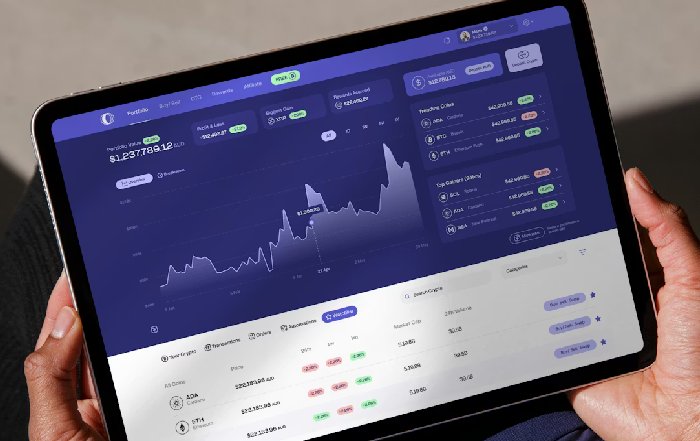
Embedded Finance: Blending Services into Everyday Platforms
Embedded Finance: From Niche Concept to Global Infrastructure
Embedded finance has moved from being a promising buzzword to becoming a foundational layer of the digital economy, transforming how consumers and businesses across North America, Europe, Asia and beyond access financial services. Rather than visiting a bank branch or even opening a standalone banking app, individuals now increasingly encounter lending, payments, insurance, savings and investment products directly inside the platforms they already use for shopping, mobility, productivity, entertainment and enterprise operations. This quiet but profound shift is restructuring the competitive landscape for banks, fintechs, technology platforms and regulators, and it is reshaping customer expectations around convenience, trust and personalization.
For FinanceTechX, whose readers span founders, financial institutions, technology leaders and policymakers, embedded finance sits at the intersection of innovation, regulation and business model transformation. It is no longer simply a technical integration question; it is a strategic choice about where value is created and who owns the customer relationship. As commerce, work and social interaction become ever more digital, embedded finance is emerging as the connective tissue that links financial infrastructure with the real economy in a seamless, context-aware manner. Understanding its evolution, risks and opportunities is essential for anyone seeking to navigate the future of fintech, banking and the broader digital economy.
Defining Embedded Finance and Why It Matters Now
Embedded finance refers to the integration of financial services such as payments, credit, insurance, deposits and investments directly into non-financial products, platforms and customer journeys. Instead of redirecting users to a bank or a standalone fintech, the financial service appears natively within the interface of an e-commerce marketplace, a ride-hailing app, a software-as-a-service platform or even an industrial IoT solution. Behind the scenes, regulated financial institutions and licensed fintech providers power these capabilities through APIs, banking-as-a-service models and cloud-native infrastructure.
This shift matters because it realigns financial services with the exact context in which financial decisions are made. A small business owner seeking working capital at the moment of reconciling invoices in an ERP system, a consumer choosing installment payments at the online checkout, or a gig worker obtaining instant payouts inside a platform wallet all illustrate how embedded finance reduces friction, improves access and creates new data-driven underwriting models. As organizations such as the Bank for International Settlements highlight when discussing the evolution of digital financial infrastructure, the combination of data, cloud and open interfaces is redefining how financial intermediation occurs. Learn more about how central banks view innovation in financial market infrastructures at the Bank for International Settlements.
For the business audience of FinanceTechX, embedded finance represents a strategic lever: it can deepen customer engagement, generate new revenue streams, and differentiate platforms in crowded markets. At the same time, it raises complex questions around regulatory responsibility, data governance, operational resilience and ecosystem partnerships, all of which require a high degree of experience, expertise, authoritativeness and trustworthiness from the firms that participate.
Readers can explore broader fintech market dynamics and innovation trends in the dedicated Fintech section of FinanceTechX, where embedded finance is increasingly treated as a core theme rather than a peripheral topic.
The Technology Foundations Behind Embedded Finance
The rise of embedded finance is inseparable from the maturation of several technological and regulatory building blocks. The first is the widespread adoption of open APIs and modular financial infrastructure, which allow non-financial platforms to integrate banking, payments and insurance products without building or operating licensed financial institutions themselves. Providers such as Stripe, Adyen and Plaid have played pivotal roles in normalizing API-based financial connectivity, while cloud hyperscalers like Amazon Web Services, Microsoft Azure and Google Cloud have enabled scalable, secure and compliant hosting of financial workloads. For more on cloud security and best practices, readers can consult guidance from the National Institute of Standards and Technology.
A second foundational element is the global movement toward open banking and open finance regulations, particularly in the United Kingdom, the European Union, Australia and markets such as Brazil and Singapore. By mandating data portability and secure third-party access to financial information, these frameworks have made it easier for platforms to build context-aware services that rely on transaction data, account information and identity verification. The UK's Open Banking Implementation Entity and the European Banking Authority have both documented how standardized APIs and consent-driven data sharing can foster competition and innovation while maintaining strong consumer protections. Learn more about regulatory approaches to open finance at the European Banking Authority.
Third, digital identity verification, anti-money laundering controls and fraud prevention technologies have advanced significantly, powered by machine learning and behavioral analytics. Organizations such as the Financial Action Task Force have issued global standards for combating financial crime, which embedded finance providers must interpret and operationalize across multiple jurisdictions. Readers interested in global AML and counter-terrorist financing standards can explore resources at the Financial Action Task Force.
Finally, the proliferation of digital wallets, tokenization technologies and real-time payment schemes has made it possible to embed not just card-based payments but also account-to-account transfers, instant disbursements and programmable money into everyday applications. Initiatives like the European Union's SEPA Instant, the United States' FedNow Service and fast payment systems in India, Brazil and Singapore demonstrate how real-time rails are becoming a default expectation. The Federal Reserve's FedNow information hub offers additional insight into how instant payments are reshaping U.S. financial services.
Within FinanceTechX's AI coverage, readers will find analysis of how artificial intelligence and machine learning underpin these technologies, from risk scoring and credit decisioning to anomaly detection and personalized financial recommendations, all of which are critical to embedded finance at scale.
Global Use Cases Transforming Consumer and Business Journeys
Across regions as diverse as the United States, Germany, Singapore, Brazil and South Africa, embedded finance manifests in distinct but converging use cases that cut across both consumer and enterprise domains. One of the most visible examples has been the mainstreaming of buy now, pay later (BNPL) options at online and point-of-sale checkouts, where providers such as Klarna, Afterpay and Affirm are integrated directly into merchant platforms. These services allow consumers to split purchases into installments without leaving the checkout flow, while merchants benefit from higher conversion rates and larger basket sizes. Regulatory scrutiny has intensified, particularly in Europe, as authorities seek to balance access to credit with consumer protection. Learn more about responsible consumer credit practices at the UK Financial Conduct Authority.
Another major domain is platform-based small business finance, where marketplaces, payments processors and B2B software platforms offer working capital, invoice factoring and revenue-based financing directly inside their dashboards. For example, payment facilitators and e-commerce platforms can underwrite loans using granular transaction data, enabling more accurate risk assessments for micro and small enterprises in markets from Canada and Australia to India and Kenya. The World Bank has highlighted how digital financial services can improve SME access to finance and support economic growth; readers can explore this theme further at the World Bank's SME finance resources.
In the mobility and gig economy sectors, ride-hailing and delivery platforms in countries such as United States, United Kingdom, Brazil and Thailand are embedding instant payout wallets, micro-insurance and savings products that address the specific needs of independent workers. These offerings often include earned wage access, fuel discounts and tailored health or accident coverage, delivered in partnership with licensed banks and insurers. Organizations like the International Labour Organization have begun examining how digital platforms and embedded financial services affect labor conditions and social protection for gig workers; learn more at the International Labour Organization.
In Asia, super apps such as Grab, Gojek and WeChat have demonstrated how payments, credit, wealth management and insurance can be woven into daily life, from food delivery and ride-hailing to messaging and e-commerce. This model, now studied by institutions such as the Monetary Authority of Singapore, has influenced strategies in Europe and North America, where large technology and retail platforms are exploring similar ecosystems, albeit within different regulatory constraints.
FinanceTechX regularly analyzes these cross-border patterns in its World and Economy coverage, helping readers understand which embedded finance models are transferable across jurisdictions and where local regulation, infrastructure or consumer behavior require adaptation.
Strategic Implications for Banks, Fintechs and Platforms
For incumbent banks in the United States, United Kingdom, Germany, France, Japan and beyond, embedded finance presents both a competitive threat and a significant opportunity. On one hand, non-bank platforms increasingly control the customer interface and data, relegating banks to the role of white-label infrastructure providers. On the other hand, banks that embrace banking-as-a-service and partnership models can expand their reach across multiple digital ecosystems without incurring the full cost of customer acquisition. Reports from consultancies such as McKinsey & Company have underscored that fee-based and platform-based revenue streams are becoming critical to bank profitability in a low-interest-rate and high-competition environment. Explore strategic perspectives on banking transformation at McKinsey's banking insights.
Fintech firms, particularly those specializing in payments, lending, digital identity and compliance, find themselves in a position to orchestrate or enable embedded finance ecosystems. Many have pivoted from direct-to-consumer models toward infrastructure and API businesses, building multi-tenant platforms capable of serving retailers, SaaS providers, marketplaces and industrial companies. This shift requires deep regulatory expertise, robust risk management and strong operational resilience, as failures at the infrastructure level can cascade across many client platforms simultaneously.
For non-financial platforms, from e-commerce and logistics to HR software and property management, embedded finance offers a path to higher margins, stickier customer relationships and differentiated product offerings. However, it also introduces regulatory exposure, reputational risk and the need for sophisticated vendor management. Boards and executives must decide whether to act as orchestrators, distributors or mere facilitators of financial services, and they must build internal capabilities in compliance, data protection and financial risk oversight even when partnering with licensed institutions.
The FinanceTechX Business section provides ongoing coverage of how enterprises across industries are reconfiguring their business models around embedded finance, with case studies and founder interviews available at FinanceTechX Business.
Regulatory, Security and Trust Considerations
Embedded finance's expansion across continents has drawn heightened attention from regulators and standard-setting bodies concerned with consumer protection, financial stability, competition and data privacy. As services become more deeply integrated into non-financial platforms, the traditional boundaries of regulatory responsibility blur, raising complex questions about who is accountable when something goes wrong. Authorities in North America, Europe and Asia-Pacific are actively examining whether existing frameworks for banking, e-money, payment services and insurance distribution adequately cover new embedded arrangements.
Data protection and privacy are central concerns, particularly in light of regulations such as the European Union's General Data Protection Regulation (GDPR) and emerging data localization and privacy laws in jurisdictions including Brazil, India, China and various U.S. states. Embedded finance relies heavily on the collection, sharing and analysis of granular behavioral and transactional data, which can improve risk assessments and personalization but also increase the risk of misuse or breaches. Guidance from regulators like the European Data Protection Board emphasizes consent, purpose limitation and data minimization, all of which must be carefully operationalized in embedded finance architectures.
Cybersecurity risks are amplified when financial services are distributed across a complex web of third-party platforms, cloud providers and API connections. A vulnerability in one component can expose sensitive financial data or enable fraud across multiple services. Institutions such as the Cybersecurity and Infrastructure Security Agency in the United States have issued best practices for securing critical infrastructure and software supply chains, which are highly relevant to embedded finance ecosystems. Learn more about securing digital financial infrastructure at the Cybersecurity and Infrastructure Security Agency.
Trust, therefore, becomes not merely a matter of brand recognition but of demonstrable operational excellence, transparent risk management and clear communication with end users about who holds their funds, who makes credit decisions and who is responsible for dispute resolution. Platforms must ensure that their embedded financial offerings meet the same or higher standards of consumer protection as traditional banking products, even when the user's primary relationship is with a non-financial brand. The FinanceTechX Security section regularly explores these themes, offering insights into best practices for safeguarding embedded financial services at FinanceTechX Security.
Embedded Finance, Crypto, and the Tokenized Future
While most embedded finance implementations today rely on conventional banking and payment rails, the increasing institutionalization of digital assets and stablecoins is beginning to influence next-generation architectures. In Switzerland, Singapore, United States and United Arab Emirates, regulators and central banks are exploring tokenized deposits, wholesale central bank digital currencies and regulated stablecoins that could enable programmable payments and asset transfers directly within enterprise workflows and consumer applications.
Organizations such as the International Monetary Fund and the Bank of England have published research on the macroeconomic and financial stability implications of digital currencies and tokenized assets. Learn more about global perspectives on digital money at the International Monetary Fund. As tokenization spreads across asset classes including bonds, funds, real estate and supply chain finance, embedded finance could evolve to support seamless, compliant access to these instruments within trading, treasury and investment platforms.
For the FinanceTechX audience, particularly those following developments in digital assets, the interplay between embedded finance and crypto-native infrastructure represents a frontier of innovation. The dedicated Crypto section of FinanceTechX tracks how regulated institutions, fintechs and DeFi protocols are converging, and how embedded experiences may eventually allow users to interact with tokenized assets without needing to understand underlying blockchain mechanics.
Talent, Jobs and the Evolving Skills Landscape
The growth of embedded finance has significant implications for the global workforce, both within financial services and across the broader technology and product ecosystem. Banks, fintechs and platforms in United States, United Kingdom, Germany, India, Singapore, Brazil and South Africa are competing for professionals who combine domain expertise in regulation, risk and compliance with technical skills in API design, cloud architecture, cybersecurity and data science. Product managers who can bridge financial and non-financial user journeys are in particularly high demand, as are legal and policy experts capable of interpreting fragmented regulatory regimes across multiple jurisdictions.
Educational institutions, professional bodies and corporate training programs are responding by developing specialized curricula in digital finance, financial data analytics and regulatory technology. Organizations like the Chartered Financial Analyst Institute and leading business schools in Europe, North America and Asia are updating their programs to address embedded and platform-based finance models. Learn more about how professional standards in finance are evolving at the CFA Institute.
For readers tracking career trends and opportunities, the FinanceTechX Jobs section provides insight into the types of roles, skills and geographic hotspots emerging in embedded finance, from New York and London to Berlin, Singapore, Sydney and São Paulo. This talent evolution underscores that embedded finance is not merely a technology trend but a structural shift in how financial expertise is deployed across the economy.
Sustainability, Green Fintech and Embedded Impact
As environmental, social and governance (ESG) considerations become central to corporate strategy and investor expectations, embedded finance is increasingly being used to drive sustainable outcomes and measure impact. In Europe, Canada, Australia and parts of Asia, platforms are integrating carbon footprint tracking, green lending, and sustainable investment products directly into consumer and business interfaces. For instance, payment and banking APIs can calculate the estimated carbon impact of purchases and offer customers the option to support verified offset or removal projects, while supply chain platforms can embed green trade finance products that reward lower-emission logistics and production practices.
Institutions such as the Network for Greening the Financial System and the United Nations Environment Programme Finance Initiative are working with central banks, supervisors and financial institutions to align financial flows with climate goals. Learn more about sustainable finance frameworks at the UNEP Finance Initiative. Embedded finance offers a powerful distribution mechanism for such products, bringing green financing options to SMEs, households and project developers who might otherwise lack access.
Within FinanceTechX, the Green Fintech and Environment coverage examines how climate data, sustainability-linked instruments and embedded experiences are converging, and how regulators in regions such as the European Union, United Kingdom, Japan and Singapore are defining taxonomies and disclosure standards that will shape product design. By connecting sustainability goals with daily financial decisions, embedded finance can transform ESG from a reporting exercise into a lived, measurable reality.
The Road Ahead: Embedded Finance as the Operating System of Commerce
Looking toward the remainder of this decade, it is increasingly plausible that embedded finance will function as the de facto operating system of global commerce, work and consumption. As more industries digitize their workflows and customer interactions, the boundaries between financial and non-financial services will continue to erode. In North America, Europe, Asia-Pacific, Africa and Latin America, sectors as diverse as healthcare, education, mobility, energy and manufacturing are exploring how contextual financial services can reduce friction, unlock new revenue and expand inclusion.
However, realizing this potential while maintaining systemic stability, consumer protection and public trust requires sustained collaboration between regulators, central banks, industry consortia and technology providers. Forums such as the World Economic Forum and the OECD are already convening stakeholders to discuss digital finance, competition and cross-border regulatory alignment; readers can follow these debates at the World Economic Forum's digital finance initiatives.
For FinanceTechX and its global readership, the task now is to move beyond headline narratives and engage deeply with the operational, regulatory and ethical dimensions of embedded finance. This means scrutinizing how risk is allocated across complex value chains, how data is governed and protected, how inclusion and consumer welfare are safeguarded, and how innovation can be harnessed to support resilient, sustainable growth in both advanced and emerging economies.
By continuing to track developments across fintech, business, banking, crypto, AI, security, jobs and green finance in its dedicated sections, FinanceTechX aims to equip decision-makers with the insight needed to design, deploy and govern embedded finance responsibly. Readers can explore the latest analysis, founder perspectives and market intelligence across the site at the FinanceTechX homepage.
In 2026, embedded finance is no longer a speculative frontier; it is an increasingly mature, yet still rapidly evolving, architecture that blends financial services into the fabric of everyday platforms. Those who understand its mechanics, respect its risks and harness its potential with integrity will help define the next chapter of global financial innovation.
